Get Relief From Sciatica Pain
Sciatica pain can make everyday movement difficult. Sharp leg pain, burning, numbness, tingling, or weakness can interfere with walking, sitting, driving, climbing stairs, sleeping, and working. At DeMaio Family Chiropractic & Physical Therapy, our Bowie and Gambrills clinics provide personalized, non-surgical care for sciatica symptoms related to nerve irritation, disc pressure, joint dysfunction, muscle tension, or spinal instability.
Our approach begins with a careful evaluation to identify where the sciatic nerve may be irritated and what may be contributing to your symptoms. Depending on your condition, care may include chiropractic adjustments, spinal decompression, Class IV laser therapy, soft-tissue support, and rehabilitative exercises designed to reduce nerve stress, improve mobility, and support long-term spinal function.
You can get started by calling the location most convenient for you:
📍 Bowie Clinic – (301) 262-4545
📍 Gambrills Clinic – (410) 721-2222
What Is Sciatica?
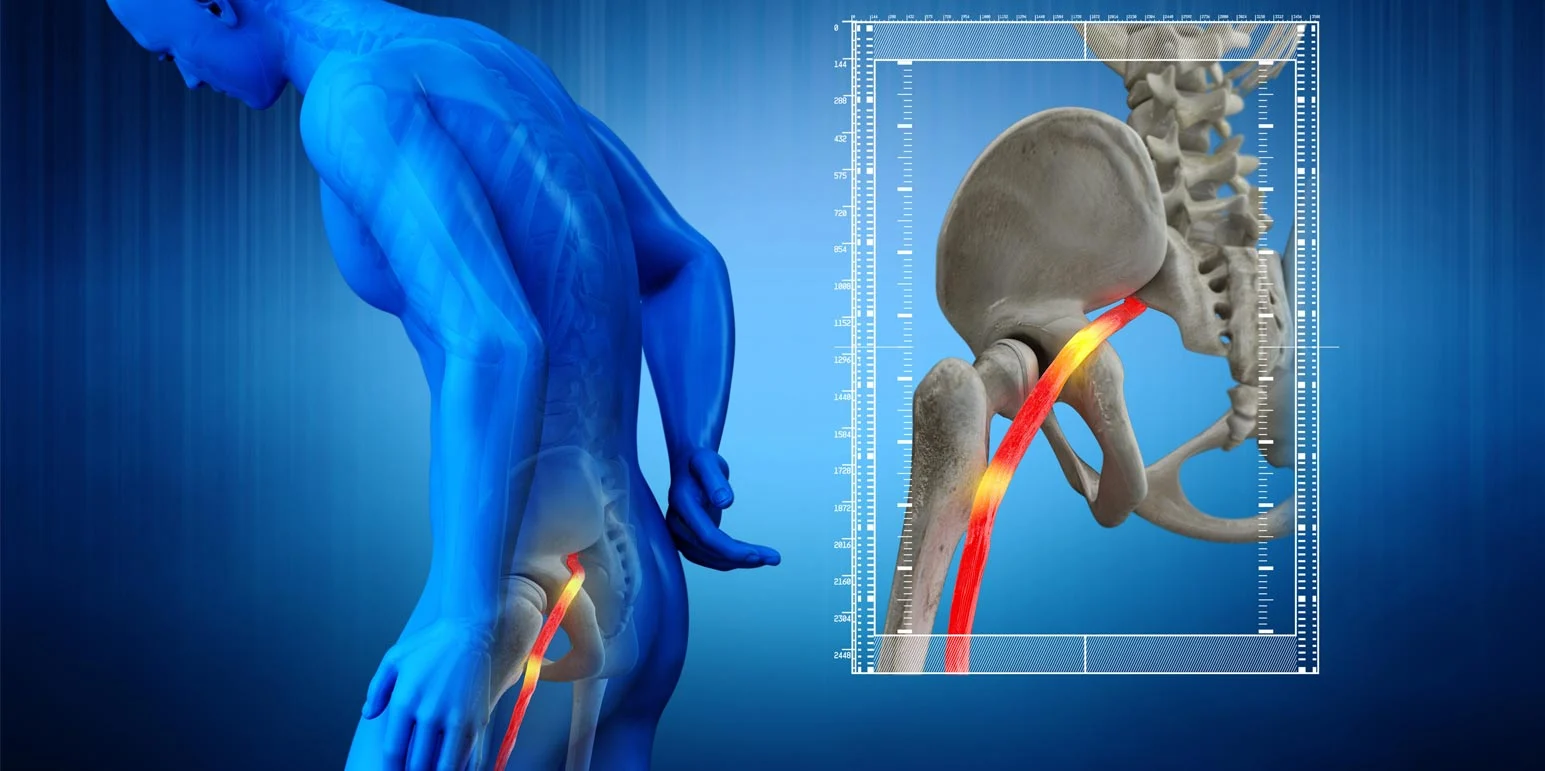
Sciatica occurs when a nerve in the lower back becomes irritated, compressed, or inflamed, causing pain or abnormal sensations that travel from the lower spine into the buttock, hip, leg, calf, or foot. Although many people call it “sciatic nerve pain,” the real source is often found where the spinal nerves exit the lower back.
A bulging disc, herniated disc, degenerative disc disease, spinal stenosis, joint restriction, inflammation, muscle tension, or pelvic imbalance can place pressure on these nerve pathways. When that happens, symptoms may travel along the path of the sciatic nerve instead of staying only in the lower back. This is why one person may feel sharp pain in the buttock, while another may notice burning, tingling, numbness, or weakness down the leg.
Sciatica can begin suddenly after lifting, twisting, falling, or being involved in an auto accident. It can also build slowly from long-term spinal wear, poor posture, repetitive strain, prolonged sitting, or untreated disc problems. No matter how it begins, the goal is to identify what is irritating the nerve and reduce the mechanical stress that keeps the symptoms active.
Common Sciatica Symptoms
Sciatica symptoms can range from mild and occasional to severe and disabling. Some patients feel pain only when sitting or driving. Others have symptoms that interfere with walking, sleeping, bending, lifting, working, or climbing stairs. The pattern of pain gives important clues about where the nerve may be irritated.
Common symptoms include sharp or burning pain in the lower back, buttock, hip, leg, calf, or foot. Some patients experience numbness, tingling, pins and needles, muscle weakness, or a heavy feeling in the leg. Sciatica may also worsen with sitting, coughing, sneezing, bending forward, or standing in one position for too long.
Severe symptoms should not be ignored. Progressive leg weakness, foot drop, loss of bowel or bladder control, or numbness in the groin or saddle area may require urgent medical evaluation. These are not symptoms to wait out or manage casually.
Common Sciatica Symptom Patterns
Pain LocationSciatica pain may begin in the lower back or buttock and travel into the hip, thigh, calf, or foot. Some patients feel pain on one side only, while others notice symptoms that shift depending on posture or activity. |
Nerve SymptomsNerve irritation may cause burning, tingling, numbness, pins and needles, weakness, or a heavy feeling in the leg. These symptoms can become more noticeable while sitting, driving, bending, coughing, or standing too long. |
Possible CausesCommon causes include herniated discs, bulging discs, degenerative disc disease, spinal stenosis, joint restriction, muscle tension, pelvic imbalance, auto accident injuries, work injuries, or repetitive strain. |
Sciatica Evaluation at Our Bowie and Gambrills Clinics
Effective sciatica treatment begins with a proper evaluation. At DeMaio Family Chiropractic & Physical Therapy, our Bowie and Gambrills clinics look beyond the location of pain to identify what may be irritating the nerve. Two patients can both have leg pain, but the cause may be very different.
Your evaluation may include a detailed history, orthopedic testing, neurological screening, range-of-motion assessment, posture and gait evaluation, muscle strength testing, reflex checks, and a review of imaging when available. When clinically necessary, X-rays, MRI findings, or other diagnostic information may help clarify whether the symptoms are related to disc pressure, stenosis, degeneration, joint restriction, instability, or another spinal condition.
This matters because sciatica is a symptom, not a complete diagnosis by itself. The treatment plan should be based on the source of nerve irritation, the severity of symptoms, the age of the injury, and how the condition is affecting daily function.
Non-Surgical Sciatica Pain Treatment in Bowie and Gambrills
Many patients with sciatica are looking for relief without immediately turning to medication, injections, or surgery. At DeMaio Family Chiropractic & Physical Therapy, treatment is personalized based on the patient’s condition, exam findings, comfort level, and response to care. The goal is to reduce nerve irritation, improve spinal mechanics, restore mobility, and help the body move with less strain.
Care may include chiropractic adjustments to improve joint motion and reduce mechanical stress in the spine, pelvis, and hips. When disc pressure is contributing to the symptoms, spinal decompression may be recommended using systems such as the D.O.C. table, Chattanooga Triton DTS, or selective DRX use when appropriate. Decompression is designed to gently reduce pressure around irritated discs and nerve roots.
Class IV laser therapy may also be used when inflammation, soft-tissue irritation, or persistent pain is part of the symptom pattern. Rehabilitative exercises can help strengthen the core, hips, and stabilizing muscles that support the lower back. Soft-tissue care, stretching, posture correction, and movement retraining may also be included when needed.
Why Stabilization Matters for Sciatica Recovery
Pain relief is important, but sciatica often returns when the body never rebuilds proper support. Weak core muscles, poor hip mobility, limited flexibility, unstable movement patterns, and repeated strain can keep placing stress on the same irritated nerve pathways. That is why rehabilitation is often an important part of long-term sciatica care.
Stabilization work may include core strengthening, pelvic control, hip mobility, posture training, flexibility exercises, and safer movement habits for lifting, sitting, driving, sleeping, and working. These details matter because the lower back does not function alone. It depends on coordinated support from the hips, pelvis, legs, and surrounding muscles.
Sciatica From Auto Accidents, Work Injuries, and Repetitive Strain
Sciatica can develop after an auto accident, fall, workplace injury, sports injury, or repetitive strain. In these cases, proper documentation and clear communication may be important, especially when workers’ compensation, personal injury, attorneys, case managers, or insurance companies are involved.
Our role is clinical. We evaluate the injury, document symptoms and functional limitations, develop a care plan, monitor progress, and provide records when appropriate. For work-related sciatica, treatment may also consider job demands such as lifting, standing, bending, driving, equipment use, or return-to-duty concerns.
When a Surgical Referral May Be Needed
Many patients with sciatica respond well to conservative care, but not every case belongs only in a chiropractic or rehabilitative setting. Referral to an orthopedic surgeon, neurosurgeon, or other medical specialist may be appropriate when there is significant or progressive muscle weakness, worsening neurological symptoms, severe structural compression, or symptoms that do not respond as expected.
Loss of bowel or bladder control, saddle numbness, or rapidly worsening leg weakness should be treated as urgent warning signs. In those situations, immediate medical evaluation is necessary.
Why Patients Choose DeMaio for Sciatica Relief
Patients choose DeMaio Family Chiropractic & Physical Therapy because our Bowie and Gambrills clinics provide a practical, personalized approach to sciatica care. We focus on careful evaluation, clear explanations, non-surgical treatment options, and long-term function—not just temporary symptom relief.
With chiropractic care, spinal decompression, Class IV laser therapy, soft-tissue support, rehabilitative exercises, and injury documentation available within the practice, patients can receive coordinated care based on their specific condition. Whether your sciatica is related to a disc injury, spinal degeneration, nerve compression, an accident, a work injury, or long-standing mechanical stress, the goal is to help you move better, feel better, and return to daily life with greater confidence.
Take Action Toward Sciatica Relief
You do not have to wait for sciatica pain to become more severe before seeking help. If leg pain, numbness, tingling, burning, or weakness is interfering with your daily life, a proper evaluation can help identify what may be irritating the nerve and what treatment options may be appropriate.
Call the office most convenient for you to schedule an evaluation:
📍 Bowie Clinic – (301) 262-4545
📍 Gambrills Clinic – (410) 721-2222
You can also begin with our 11-Question Spine Health Quiz to see whether your symptoms may align with common sciatica, disc, or nerve-related problems.
Frequently Asked Questions:
Whether you’re recovering from a recent injury or managing long-standing sciatica, our goal at DeMaio Family Chiropractic & Physical Therapy is to help reduce nerve irritation, improve mobility, and help you return to daily life with greater comfort and confidence.
Schedule your consultation:
📍 Bowie Office – (301) 262-4545
📍 Gambrills Office – (410) 721-2222
Frequently Asked Questions About
Sciatica Pain Relief Therapy In Bowie, MD & Gambrills, MD
Sciatica refers to pain, tingling, numbness, or weakness that travels along the path of the sciatic nerve, usually from the lower back into the buttock, leg, or foot. It is most often caused by irritation or compression of a nerve root in the lower spine, commonly from a herniated disc, spinal stenosis, or joint changes.
Sciatica typically feels like sharp, burning, or shooting pain that follows a line down the back or side of the leg. You may also notice tingling, numbness, or weakness in the leg or foot. If your symptoms are one-sided and seem to follow a nerve-like path, a professional evaluation can help confirm whether sciatica is the cause.
Yes. For many patients, gentle chiropractic adjustments and spinal decompression can reduce pressure on the affected nerve root, ease inflammation, and improve mobility. At our Bowie and Gambrills clinics, decompression with D.O.C. and Triton DTS systems, combined with targeted rehab, is often effective in helping sciatica symptoms improve without surgery.
Most people with sciatica do not require surgery. Many improve with conservative care such as decompression, chiropractic treatment, exercise therapy, and lifestyle changes. Surgical consultation is typically considered only if symptoms are severe, progressive, or accompanied by red flags like significant weakness or loss of bowel or bladder control.
Recovery time varies based on how long the issue has been present, the severity of nerve irritation, and overall health. Some patients notice improvement within a few weeks, while chronic cases may take longer and require a more structured treatment plan. Your provider will review realistic expectations with you after your evaluation.
Are You A Candidate For Spinal Decompression?
It’s quick and simple — Just answer 11 Yes-or-No questions.
Dr. DeMaio will personally review your responses to determine if you’re a candidate for spinal decompression. A member of our team will then contact you to discuss the next step.
Don’t forget to complete the contact form at the end so we know how to reach you.