I find myself pondering things that used to seem so simple… like the question, “Who owns this company?” There was a time when the answer was usually obvious. You walked into a chiropractic office, the chiropractor’s name was on the sign, and there was a pretty good chance that chiropractor owned the practice. If the office did well, the doctor did well. If patients were unhappy, the doctor heard about it. If the waiting room needed new chairs, someone in the building probably made the decision.
Does anyone remember Bartles & Jaymes? Their commercials featured two older gentlemen, “Frank Bartles” and “Ed Jaymes,” sitting on a front porch and thanking you for your support of their wine coolers. They certainly looked like the two fellows who had started the company and were still keeping an eye on things. Except they weren’t. The characters were fictional, and Bartles & Jaymes was actually a brand of the very successful E & J Gallo Winery.
That was advertising, of course, and nobody was choosing a healthcare provider based on Frank and Ed. But the underlying idea feels strangely relevant today: the name on the sign does not necessarily tell you who owns what is behind it.
Healthcare has changed considerably in that regard. Across medicine, dentistry, physical therapy, veterinary medicine and other professional services, investment groups have increasingly acquired independent practices and combined them into larger organizations. Sometimes the original name stays on the building. The same doctors may continue working there. From the parking lot—or even from the treatment room—a patient may see very little difference.
Behind the scenes, however, the owner may no longer be the person whose name is on the door.
That is where things get interesting.
The Sign May Stay the Same Even When the Owner Changes
One common model is known as a roll-up. An investment group buys multiple independent practices, combines certain business operations, and builds a much larger organization from businesses that were once locally owned.
Healthcare transactions can become more complicated because states have different rules governing professional practices. In some arrangements, a management services organization handles the non-clinical side of the business while the professional practice maintains a separate legal structure.
To the patient, none of this is particularly visible.
The website may still talk about being part of the community. The clinic may still have photographs of the original doctor. The receptionist may have worked there for 15 years. Nothing necessarily announces that financial control, management priorities or ownership have changed.
And corporate ownership does not automatically mean bad care. Large organizations can bring capital, better technology, standardized procedures, employee benefits and purchasing power that a small practice may have difficulty matching.
But ownership does create incentives.
That is true whether the owner is a chiropractor, a hospital system, a publicly traded corporation or a private investment fund. The more meaningful question is whose interests ultimately shape the decisions being made.
A Healthcare Practice Is Also a Business… But What Kind of Business?
Every business has overhead, and a chiropractic office is no different. Employees have to be paid, equipment has to be purchased, and there are always expenses such as rent, insurance, software, continuing education, utilities, and dozens of less glamorous costs that come with keeping a healthcare practice running.
DeMaio Family Chiropractic & Physical Therapy is a business too. Pretending otherwise would be pointless. What makes it different is not that it has expenses or needs to be profitable, but that the ownership remains local and direct.
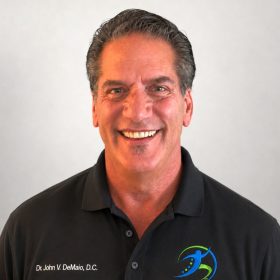
The practice is independently owned by Dr. John DeMaio, who still treats patients in the same offices he owns. There is no corporate parent several states away, no outside investment fund holding the practice as part of a portfolio, and no group of shareholders waiting for a quarterly report.
For patients who want their care decisions made locally, by the people actually working in the practice, that makes DeMaio Family Chiropractic & Physical Therapy becomes the right choice.
Perhaps this is why we are considered by many to be “One of the best Chiropractic, Physical Therapy, and Acupuncture Clinics in Bowie, MD and Gambrills, MD.”
What Happens When the Spreadsheet Moves Farther Away From the Patient?
There is nothing inherently sinister about measuring productivity. A practice that never watches expenses or revenue will eventually become a former practice.
Still, there is a meaningful difference between profitability being necessary to keep a healthcare office healthy and profitability becoming the principal reason the organization exists.
An independently owned clinic can decide that a particular piece of equipment is worth buying because patients need it, even if somebody looking strictly at utilization numbers might hesitate.
It can decide that an appointment needs another ten minutes.
It can keep an employee whose value to the practice is obvious to everyone who works there but difficult to explain in a spreadsheet.
It can offer chiropractic care, physical therapy, massage therapy and dry needling under one roof because the owner believes those services belong together, rather than because a corporate development team has decided which service line produces the best margin.
Could a corporate practice make those exact same decisions? Of course. The difference is that an independent owner generally does not have to persuade somebody above him.
There is nobody above him.
When the person making the business decisions is also standing in the clinic treating patients, the distance between a decision and its consequences becomes very short.
That does not guarantee that every decision will be correct.
It does mean the person making it has to live with it.
The Strange Economics of Selling a Successful Practice
There is an obvious question here: why would a doctor sell?
Sometimes there are very good reasons.
A physician, dentist, chiropractor or physical therapist may have spent 25 or 30 years building a practice and want to retire. Another may be tired of dealing with payroll, compliance, hiring, insurance contracts and the thousand other responsibilities that come with ownership. A larger organization may offer enough money to make selling difficult to refuse.
For younger providers, corporate employment can also be attractive. Owning a healthcare practice means becoming a clinician and a business owner simultaneously, whether you planned on the second job or not.
So this is not a morality play with independent doctors on one side and villains carrying spreadsheets on the other.
It is a structural change in healthcare… And patients are allowed to be curious about it.
We routinely ask where our food came from. We want to know who manufactured a medication. People research who owns a bank before depositing their money and who built a house before buying it.
Yet many people have no idea who owns the healthcare practice treating them.
That is a little strange when you think about it. And that makes me go, hmmm.
What Does Independent Ownership Actually Mean at DeMaio?
At DeMaio Family Chiropractic & Physical Therapy, Dr. John DeMaio has practiced in Maryland for decades. The Bowie and Gambrills offices were not assembled as part of an acquisition strategy, and they are not assets inside an investment portfolio.
There are no outside shareholders whose return depends on increasing the value of the practice.
There is no private-equity exit date.
There is no corporate headquarters deciding what DeMaio Family Chiropractic & Physical Therapy needs to become five years from now.
The people whose livelihoods are directly connected to the health of the practice are the people working inside it.
That distinction matters to us.
It means decisions about chiropractic care, physical therapy, massage therapy, dry needling, rehabilitation, equipment and patient services can be made locally by people who actually know the patients and the communities being served.
Bowie is not a market on a spreadsheet… Gambrills is not a Market Territory… These are where our patients live. And we care about them.
Bigger Is Not Automatically Better. Smaller Is Not Automatically Better Either.
This is where discussions about healthcare ownership can become oversimplified very quickly. Corporate ownership does not automatically mean poor care, just as independent ownership does not automatically guarantee excellent care. A poorly managed independent clinic is still poorly managed, and a well-run corporate clinic can employ skilled clinicians who care deeply about the people they treat.
What ownership can influence is how decisions are made and how far those decisions have to travel before they reach the patient. In a large organization, a change may move through administrators, regional management, corporate policy, financial review, and standardized operating procedures before anything actually happens inside the clinic. In an independently owned practice, that same conversation may take place twenty feet from the treatment room with the person who owns the business.
That difference does not determine the quality of every treatment or every provider. It does, however, affect who has the authority to make changes, who answers for those decisions, and how directly the people making them understand the patients and communities being served.
Ask a Question You Probably Never Thought to Ask
Most patients already know the questions they want answered when choosing a healthcare provider. Does the office take my insurance? How long has the doctor been practicing? What treatments are available? Does the practice regularly see patients with the problem I am dealing with?
All of those are reasonable questions. There is another one that probably deserves a place on the list these days: Who owns this practice?
Not long ago, the answer would have seemed almost unnecessary. Today, it may tell you quite a bit about how the organization operates and where its decisions ultimately come from.
At DeMaio Family Chiropractic & Physical Therapy, the answer is straightforward. The practice is independently owned by Dr. John DeMaio. There is no corporate holding company behind the scenes, no investment fund collecting chiropractic offices into a larger portfolio, and no outside group of shareholders expecting the practice to become more valuable before the next transaction.
The people working inside DeMaio Family Chiropractic & Physical Therapy are the people directly invested in what happens there every day. The employees know the patients. Dr. DeMaio knows the communities the practice serves. Decisions affecting the Bowie and Gambrills offices are made by people who actually walk through those doors.
Maybe that way of doing business is becoming a little old-fashioned…
That’s ok, we are comfortable with that.
With care,

Dr. John DeMaio, D.C., CNS
A Chiropractor in Bowie & Gambrills, Maryland
For appointments, call or text my office at:
Gambrills – (410) 721-2222
Bowie – (301) 262-4545